
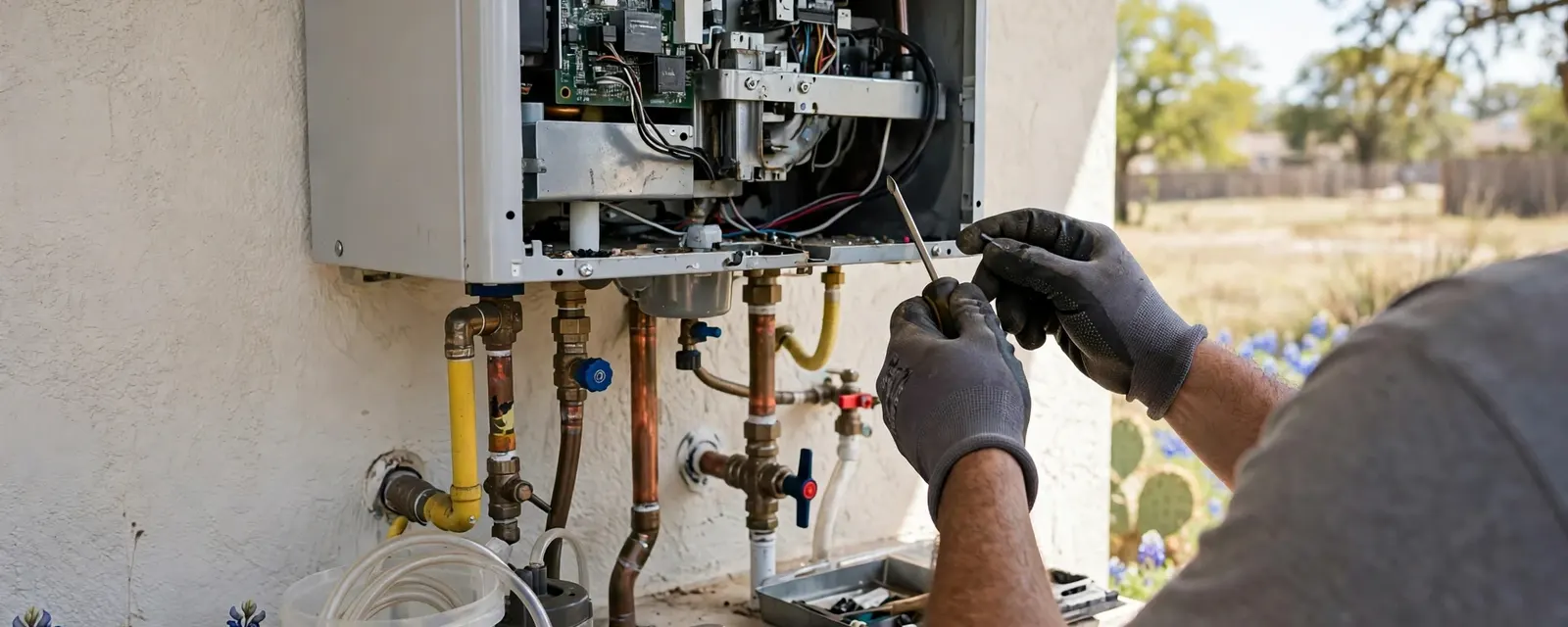
First steps when a tankless unit leaks
Shut off the cold water to the unit using the valve below it, and turn off the power or the gas. If the unit is electric, switch off the breaker. If it is gas and you smell gas, leave the building and call your gas utility from outside. Place a bucket or towels to catch water and take photos of the leak.
Tankless units do not hold a tank of water, so a leak is usually smaller than a tank failure, but it still damages cabinets, walls and floors if it continues. A leak that appears only when the unit runs often points to a fitting or the heat exchanger. A leak that is constant even when the unit is off often comes from a supply valve or a pipe.
If hot water is still needed, our water heater repair page covers urgent cases and temporary measures.
Where tankless heaters most often leak
- Service valves and unions. Loose or worn seals on the valves below the unit.
- Water connections. The inlet and outlet fittings can loosen or corrode.
- The pressure relief valve. It can drip if water pressure is high or the valve is worn.
- Condensate lines. Condensing models produce acidic water that must drain away, and a blocked line can overflow.
- The heat exchanger. Scale and corrosion can crack it, which is a serious repair.
- A freeze crack. Cold nights can split fittings or the exchanger.
Safe checks before the plumber arrives
What the plumber looks for
A plumber starts at the outside and works in. Valves and fittings are quick to tighten or replace. The relief valve is tested, and a drip may mean high pressure that needs a regulator or an expansion tank. Condensate drains are cleared.
If the heat exchanger is cracked, the unit may need an exchanger replacement or a new heater, and the plumber will explain which. Age, warranty and the cost of the part decide the choice. We say plainly what we find and let you decide. If a replacement is the answer, water heater replacement explains the process.
Tankless leaks in Apple Valley: scale and freezing
Liberty Utilities reported 2022 hardness between 57 and 130 ppm, averaging near 80 ppm. Scale on a heat exchanger and in fittings is common in this range, and a unit that has never been flushed is more likely to leak. A yearly descaling flush helps, and our tankless water heater page explains it.
Cold is the other local cause. The Town reports winter lows in the low 20s and a record low of -1F. A tankless unit in an unheated garage or on an outside wall can freeze and crack on a hard night. Use the unit's freeze protection, insulate exposed pipes and know where the shutoff is before the first cold snap.
Follow the maker's service guidelines for your model, since a repair that ignores them can put the warranty at risk. Keep the manual and the service record together.
Source: Liberty Utilities 2022 water quality data and Town of Apple Valley climate profile.
Leak location and likely cause
| Where | Likely cause | Fix |
|---|---|---|
| Below the unit at valves | Worn seals or loose fittings | Tighten or replace |
| Top of the unit | Water connections or exchanger | Inspect, may be serious |
| Relief valve discharge | High pressure or worn valve | Test, regulator may help |
| Condensate area | Blocked drain | Clear the line |
| After a freeze | Split fitting or exchanger | Call, shut off |
Preventing leaks and extending life
Flush the unit on the maker's schedule, keep the inlet filter clean and have the venting and connections checked yearly. Insulate exposed pipes and use freeze protection in cold weather. A softener or a scale inhibitor reduces scale at the source.
Keep a record of service, since warranties often depend on it. A drain pan with a leak sensor under the unit warns you early. Homes in Victorville and Hesperia get the same service from the same line.
Insurance and documentation
Photograph the leak and the damage before cleaning up. Insurance may cover sudden water damage from a failed fitting, though it usually does not cover the heater itself when it fails from age or scale. Keep receipts and the old part if a plumber replaces one.
If water has reached a wall or the floor, dry it quickly, since mold can start in a couple of days. A small leak can be dried with fans and open windows, and larger water needs a drying service. Ask your agent before repairs when you can.
Tankless leak questions from Apple Valley homeowners
Fittings, valves, scale or a freeze crack are the usual causes. A cracked heat exchanger is the most serious.
Shut it off until the leak is found. Water and electricity or gas together are a risk.
Valves and fittings are quick repairs. A cracked exchanger may mean replacement.
Scale can contribute to corrosion and clogged parts, so a yearly flush helps.
Leave the home and call your gas utility from outside. Do not use switches.
Still have a question about your situation? Call (760) 986-1999 any hour and ask.