
Slab leak repair in Apple Valley, starting with confirmation
If your house sits on a concrete slab, its water lines may run through or beneath that slab, and a leak there can go unnoticed until the floor warms up or the bill climbs. Our emergency slab leak repair line in Apple Valley, CA is open 24/7, so call (760) 986-1999 at any hour. If water is surfacing through the floor or flooring is lifting, close the main water valve right away and switch off power to wet areas.
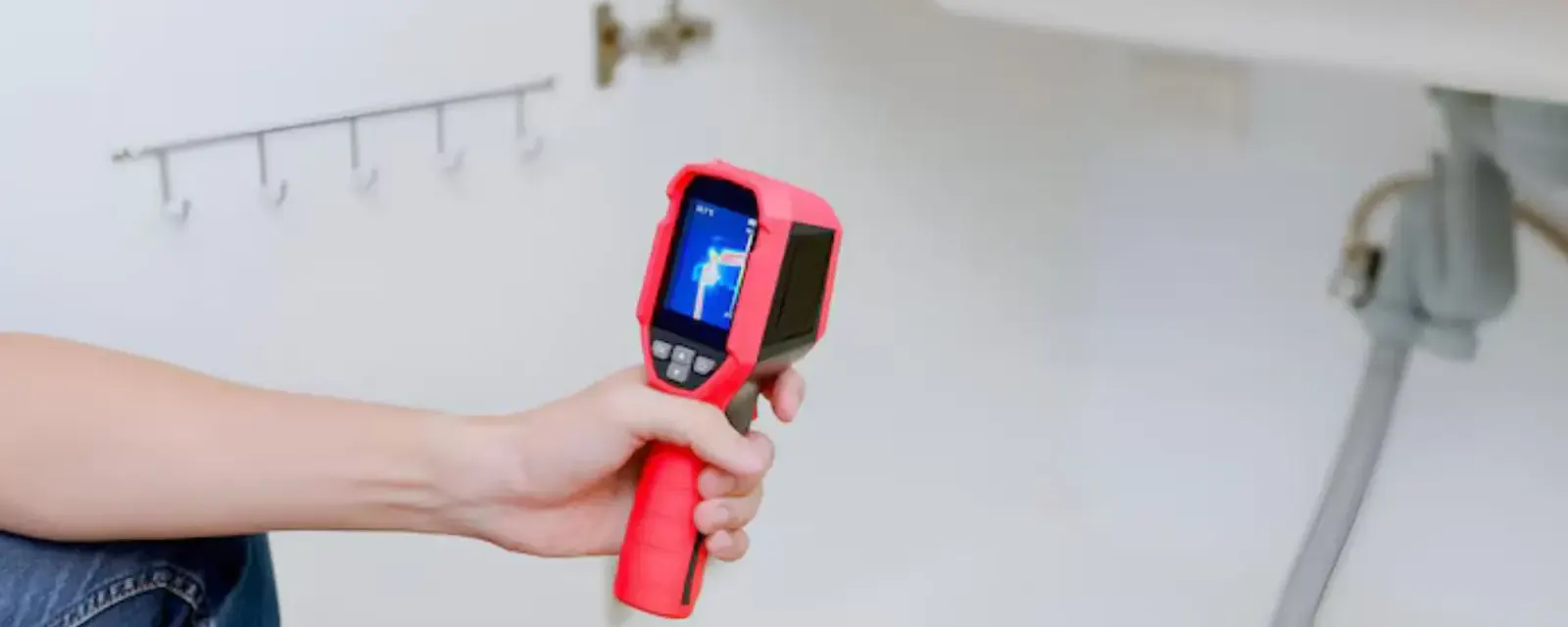
Slab leak repair starts with confirming the leak, because a hot spot on the floor can have other causes. We isolate hot and cold lines with pressure tests, listen along the slab with acoustic equipment and use thermal imaging to track the warm path. Only then do we talk about repair.
Same-day appointments are available when schedules allow. Fast action matters because water under a slab can undermine soil, lift flooring and feed mold in the walls.
Signs of a slab leak
Slab leaks rarely announce themselves with a puddle. These are the usual clues.
- A warm or hot patch on the floor, most noticeable on tile or concrete.
- The sound of running water when everything is off, sometimes through the floor.
- A water meter that moves with every fixture off.
- A sudden jump in the water bill with no change in use.
- Damp carpet, lifted flooring or cracked tile in one area.
- A musty smell or mildew along baseboards or in a closet.
- Low hot water pressure while cold pressure is normal.
How we confirm a slab leak
Slab leak repair options at a glance
| Option | What it involves | Best for |
|---|---|---|
| Spot repair | Cut an access opening in the slab, replace the damaged section, patch the concrete | One clearly located leak in an otherwise sound line |
| Reroute | Abandon the leaking line under the slab and run new pipe through walls or the attic | Lines that have failed more than once, or are hard to reach |
| Repipe | Replace all or most supply lines in the house, see repiping | Widespread corrosion or a history of repeated leaks |
| Epoxy lining | Coat the inside of the existing pipe to seal it | Selected cases, which we explain when they apply |
Spot repair versus reroute
A spot repair is the most direct choice when the leak is located and the rest of the line is healthy. We open the slab at the marked point, replace the damaged section and repair the concrete. The tradeoff is noise, dust and a patch in the floor, and if more leaks follow, they will each need the same treatment.
A reroute avoids the slab altogether. The old line is capped and left in place, and new pipe goes in through attic space or walls. It costs more at the start, but it can end a pattern of repeat leaks. We explain both options, give you a price for each and tell you which one we would choose in your situation, so you can decide without pressure.
Because a slab leak often shares a cause with other aging lines, it is worth asking us to check how the rest of the house is plumbed.
Why a slab leak happens
Pipes under a slab are exposed to abrasion against concrete and gravel, to settling of the ground and to the chemistry of the water inside. Copper can pit from the outside, hot water lines wear faster than cold lines and fittings can fail where the pipe was bent during construction.
Water hardness alone has not been shown to be a cause. Liberty Utilities reports moderately hard water for most of Apple Valley, with an average near 80 ppm, but the pipe, the installation and the soil around it matter far more than one number on a water report.
Before major slab work in Apple Valley
A slab repair or reroute can be a large job, so verify the plumber before you sign. The California Contractors State License Board offers an online lookup by license number or business name that shows license status and any complaint disclosure. The Town of Apple Valley Building and Safety Division is the place to ask whether a reroute or repipe needs a permit, since permit rules vary by job.
Your homeowner policy may also affect the plan. Many policies cover the water damage from a sudden leak and sometimes the cost of reaching the pipe, but not the pipe itself. Photograph the damage and call your insurer before work begins.
California Plumbing Code standards govern how replacement lines are installed, and work through a slab often involves a permit. Ask the Town of Apple Valley Building and Safety Division before you agree to a plan.
Source: California Contractors State License Board public license lookup and Town of Apple Valley Building and Safety guidance.
What affects the cost of slab leak repair
- Repair path. A spot repair, a reroute and a repipe are very different scopes of work.
- Leak depth and flooring. Tile and finished flooring above the leak add removal and replacement.
- Pipe size and material. Hot and cold lines in copper or PEX need different materials and fittings.
- Access. A reroute through an open attic is simpler than one through finished rooms.
- Restoration afterward. Floor and drywall repair is separate from the plumbing repair.
Insurance note: a sudden slab leak may be covered for resulting water damage, but the leaking pipe itself and gradual damage often are not. Document everything and call (760) 986-1999 for your real number.
Slab leak questions from Apple Valley homeowners
Yes. The line at (760) 986-1999 is open 24/7, including holidays. If water is surfacing, close the main valve first and call.
A warm spot can be a hot water line leaking under the slab, but it can also come from a heating system or sunlight. A pressure test and thermal scan tell the difference.
Sometimes. A reroute avoids the slab, and in some cases we can discuss lining the pipe. We explain the options after we confirm the leak.
It depends on the path. A spot repair is usually quicker than a reroute, and we explain the schedule when we give you the price.
Policies differ. Many cover resulting water damage and sometimes access, but not the pipe. Ask your insurer before work begins.
Yes. See our Victorville and Hesperia pages for the ZIP codes we serve.
Still have a question about your situation? Call (760) 986-1999 any hour and ask.