
Leak detection in Apple Valley when the source is out of sight
Water that you can see is easy. The hard calls are the ones where the meter moves with every fixture off, a ceiling stain keeps growing or a floor feels warm underfoot. Our emergency leak detection line in Apple Valley, CA is open 24/7, so call (760) 986-1999 at any hour. If water is actively spreading, close the main shut-off valve first and keep clear of wet outlets and appliances.
Leak detection means locating the exact point where water escapes before anyone opens a wall or cuts a slab. We use meter checks, pressure testing, acoustic listening, thermal imaging and moisture mapping, and we explain which tools apply to your situation before starting.
Same-day appointments are available when schedules allow. Fast detection matters because a small leak left alone for weeks can rot framing, lift flooring and feed mold, long before the first stain shows.
A two-minute meter test you can do yourself
Before you call, you can confirm whether a leak exists with the water meter, which sits in a box near the street or the front of the property.
Meter still running or a high water bill
This is one of the most common reasons homeowners call. A leak between the meter and the house, a leaking toilet, an irrigation valve stuck open or a pinhole in a copper line can each raise a bill without leaving a wet patch.
We start at the meter and isolate sections. Closing the main valve at the house tells us whether the leak is inside the house or on the service line between the meter and the foundation. From there we narrow it to a branch, a room or a stretch of buried pipe. That process is cheaper than opening walls, and it ends with a leak location you can see on the floor or the yard.
If the leak turns out to be an overgrown toilet flapper or a worn faucet cartridge, we say so, and you may only need toilet repair or faucet repair.
Ceiling, wall and attic leaks
Water that appears on a ceiling has usually traveled. It runs along framing and pipe before it drips where gravity decides. The stain often sits several feet from the actual leak.
We check supply lines above the ceiling, drain lines from the bathroom upstairs, water heater and air conditioner condensate lines, and the roof when the stain shows up after rain. Thermal imaging helps spot a cold, wet band behind drywall, and a moisture meter confirms the extent before we cut anything. A small inspection hole costs far less than opening the whole wall.
Under-house and crawlspace leaks
Homes with a raised foundation or crawlspace hide supply and drain lines where you cannot see them. A damp smell, a spike in the bill or the sound of dripping under the floor are the usual clues, and you may see wet soil or efflorescence on the foundation wall.
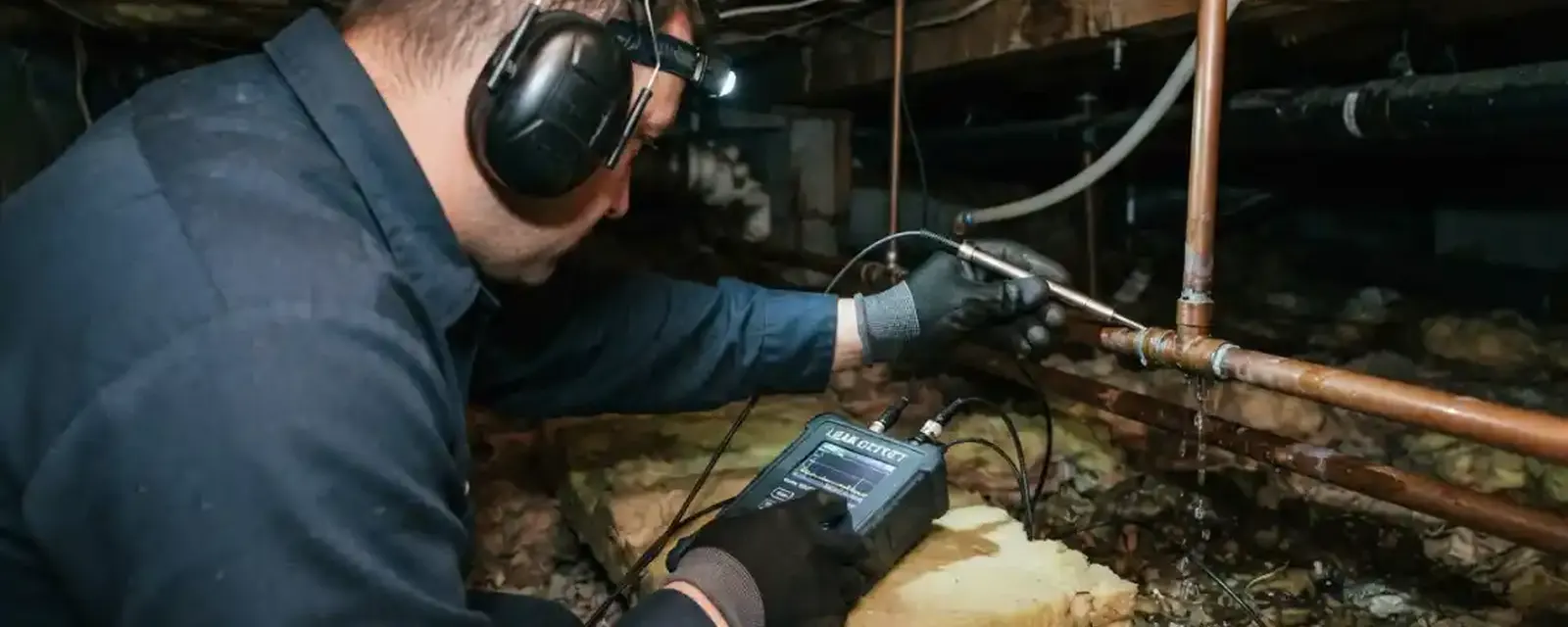
We pressure test supply lines to confirm the leak, then trace the wet section using listening equipment and a visual check with a light. Leaks in drain lines are different from supply leaks, because they only show up when water is running through them. If the drain line is the source, a camera look can find a crack or a separated joint.
The same tools help when water appears under a house that sits on a slab, where a slab leak is the likelier cause.
Buried lines, yard leaks and irrigation
The water service line runs from the meter to the house and is often the longest single pipe on a property. A leak there can run for months before a wet patch shows, and a sprinkler valve or irrigation lateral that sticks open can look just like a service line leak on the bill.
We separate those by isolating the irrigation system and shutting the main at the house in turn. Yard leaks may be located with acoustic equipment that listens for the sound of water escaping from a pressurized pipe. Before any digging, call 811 at least two working days ahead so utilities can mark their lines, and we will tell you how that fits the repair schedule.
Pool and spa plumbing is the exception. We can pressure test the supply and return lines that connect to the equipment, but a leak in the pool shell is a separate specialty, and we will say so if that is where the evidence points.
Who handles which side of the meter in Apple Valley
Liberty Utilities serves about 81 percent of Apple Valley through its Apple Valley Ranchos system, and the Town lists 11 water purveyors in all, including Golden State Water. Your bill shows which one serves your address. Liberty's website lists a 24-hour control center for leaks and emergencies, and that is the right contact for a leak you can see on the street side of the meter.
Utilities generally treat the meter as the dividing line between their responsibility and yours, but ask your utility where its line is drawn. On your side of the meter, the repair is yours. A main shut-off valve that does not close fully is a good reason to have the valve replaced before an emergency, and a plumber can confirm that during a visit.
Responsibility for the service line varies by water purveyor, so ask yours where its side ends. According to Dig Alert, call 811 at least two working days before any digging to trace a buried leak.
Source: Town of Apple Valley water purveyor listing and Liberty Utilities customer information.
Symptom, likely location and first test
| Symptom | Likely location | First test |
|---|---|---|
| Meter moves, nothing on | Service line, irrigation or a toilet | Close the main at the house, then recheck the meter |
| High bill, no wet spot | Toilet, irrigation valve or slab line | Food coloring in tanks, irrigation off, meter test |
| Warm floor patch | Hot water line under the slab | Thermal imaging and a hot line pressure test |
| Growing ceiling stain | Supply or drain line above, roof or condensate line | Moisture mapping and a dry day check |
| Damp crawlspace smell | Supply or drain line under the house | Pressure test and a visual check |
| Green patch in the yard | Service line or irrigation lateral | Acoustic listening, then isolate irrigation |
What affects the cost of leak detection
- Where the leak sits. A fixture leak is quick to find, while a line under a slab or a long yard run takes more time and equipment.
- Tools needed. Meter and pressure tests are fast, and thermal imaging, listening equipment and camera work add time.
- Access. Open crawlspaces and accessible cleanouts speed things up, while finished walls and landscaping slow them.
- Number of leaks. A house with one leak and a house with several can look the same from the outside.
- Repair afterward. Locating the leak and repairing it are separate steps, so you can decide on the repair after you know the source.
Insurance note: many homeowner policies cover water damage from a sudden leak and may cover tear-out to reach a hidden leak, but not the cost of the repair itself or damage from a slow, long-term leak. Ask your insurer before work begins and call (760) 986-1999 for your real number.
Leak detection questions from Apple Valley homeowners
Yes. The line at (760) 986-1999 is open 24/7, including holidays. If water is spreading, close the main shut-off valve first, then call and tell us what you see.
Turn everything off, note the reading, wait fifteen minutes and read it again. If the number changed or the small leak indicator is spinning, water is escaping on your side of the meter.
Common causes include a running toilet, a stuck irrigation valve or a slow leak in a service line or under the slab. A meter and isolation test finds which one without digging.
Only as a last step. We use meter checks, pressure tests, listening equipment and thermal imaging first, and we cut a small inspection opening only when the evidence points to a spot.
We can isolate and test irrigation supply lines and valves. Pool shell leaks are a separate specialty, and we will tell you if that is the problem.
Yes. See our Victorville and Hesperia pages for the ZIP codes we serve.
Still have a question about your situation? Call (760) 986-1999 any hour and ask.