
One fixture or the whole house
The first question sorts most cases. If only one faucet or shower is weak, the cause is local, usually a clogged aerator or showerhead or a worn cartridge. If every fixture is weak, the cause is upstream, and the list includes a partly closed valve, a failing pressure regulator, a leak, corroded supply pipes or a problem with the utility supply.
Then ask whether it is hot, cold or both. Low pressure only on hot points to the water heater or its valves. Low pressure on both suggests the supply side. A sudden drop is different from a slow decline over years, and each has different suspects.
If you suspect a leak, our leak detection page explains how to find one without tearing into walls.
Common causes of low water pressure
- Clogged aerators and showerheads from mineral scale.
- A partly closed shutoff or main valve, often after earlier work.
- A failing pressure regulator on the main line.
- A hidden leak that diverts water before it reaches fixtures.
- Corroded or narrowed supply pipes, especially galvanized steel.
- A sediment-choked water heater or hot outlet.
How to narrow it down at home
The pressure regulator and the service line
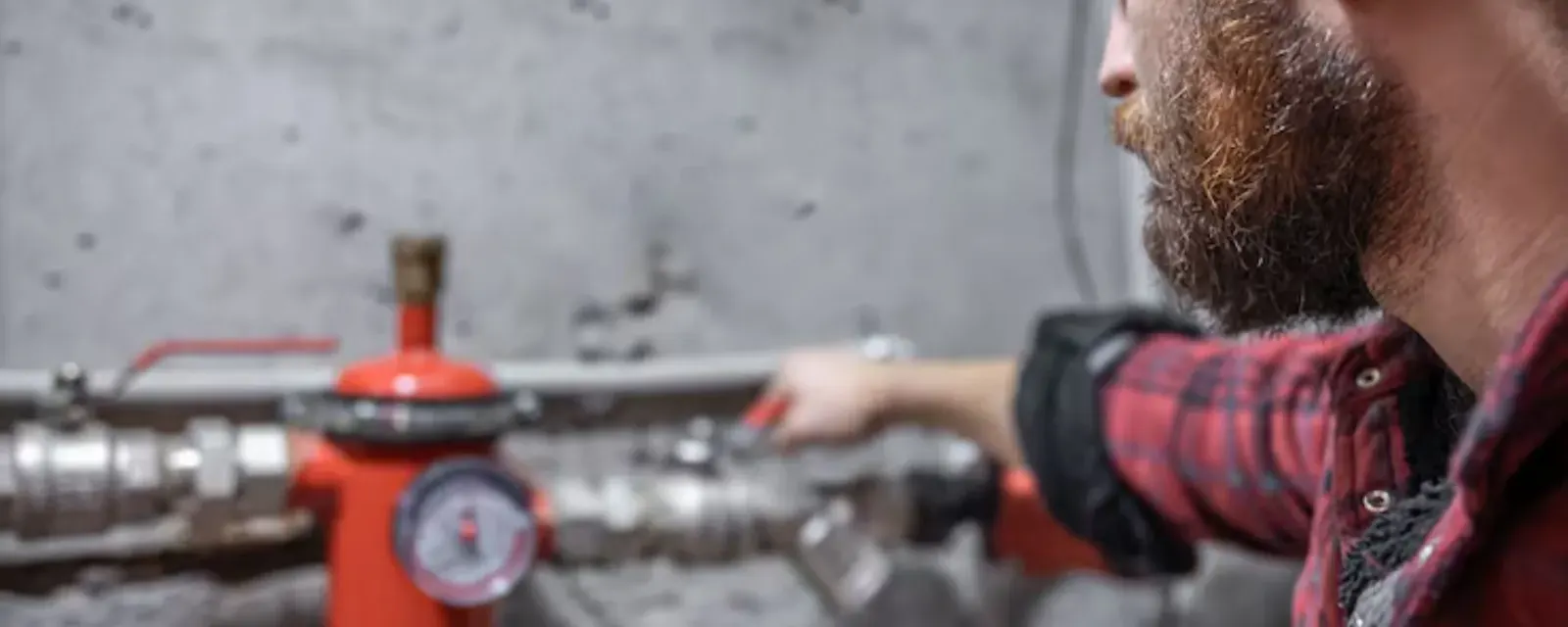
Many homes have a pressure regulator near the main shutoff, a bell-shaped valve that reduces street pressure to a safe level. When it wears out, pressure can fall, or in some cases rise too high and strain fixtures. A plumber can test the pressure with a gauge on a hose bib and replace the regulator if it is the cause.
The service line between the meter and the house is another suspect. A leak or corrosion there can drop pressure for the whole home. If the meter test shows water moving with everything off, that line is a prime candidate, and a plumber can trace it. Our repiping page covers service line replacement and old supply pipes.
Water pressure in Apple Valley: scale, supply and elevation
Liberty Utilities reported 2022 hardness from 57 to 130 ppm, averaging near 80 ppm, so scale in aerators and showerheads is a normal cause of weak flow here. A vinegar soak every few months keeps them clear. The Town lists 11 water purveyors, and each runs its own system, so a drop that hits a whole neighborhood is worth reporting to your purveyor.
Apple Valley sits at roughly 2,900 to 3,000 feet and water systems rely on wells and pumps, so a pump or supply issue can affect pressure for many customers at once. If neighbors have the same problem, call your purveyor first. If only your house is affected, the cause is on your side of the meter.
Plumbing code standards limit how high water pressure may run inside a home, which is why a pressure regulator is common where street pressure is high. A plumber can test yours with a gauge.
Source: Liberty Utilities 2022 water quality data and Town of Apple Valley planning information.
Pattern and likely cause
| Pattern | Likely cause | Next step |
|---|---|---|
| One faucet only | Clogged aerator or cartridge | Clean or replace |
| Hot only | Water heater or hot valve | Check heater and valves |
| Whole house, sudden | Closed valve, leak or regulator | Check main valve, meter test |
| Whole house, gradual | Corroded pipes or scale | Plumber assessment |
| Whole neighborhood | Utility supply problem | Call your purveyor |
When to call a plumber
Call if the meter test shows a leak, if pressure dropped suddenly in the whole house or if you see brown water. Call if cleaning aerators does not help and several fixtures are weak. Call if you suspect a regulator or if pressure swings from weak to strong.
A plumber measures pressure, checks valves and the regulator, and looks for leaks and corrosion. If the cause is old pipe, we explain whether a repair or repipe makes sense. Homes in Victorville and Hesperia have different water providers, so check your own report.
Keeping pressure healthy
Clean aerators and showerheads a few times a year. Flush the water heater on schedule. Open and close the main valve once a year so it does not seize. If you have a regulator, have it tested every several years.
Know your pressure. A simple gauge on a hose bib shows it, and most homes do well in a moderate range. Very high pressure is hard on fixtures and appliances, while very low pressure points to one of the causes above.
Low pressure questions from Apple Valley homeowners
It is often a clogged aerator, a closed valve, a failing regulator, a leak or old pipes. Start by checking one fixture versus the whole house.
Yes, scale narrows aerators, showerheads and pipes over time.
If neighbors are affected too, it is likely the utility. If only your home is, it is likely your side of the meter.
A valve that reduces street pressure to a safe level for your home. It can wear out.
Yes. A hidden leak can drop pressure, which is why the meter test is useful.
Still have a question about your situation? Call (760) 986-1999 any hour and ask.