
What vinegar can and cannot do in a drain
White vinegar is a mild acid. It dissolves some mineral scale and loosens a thin film of soap and grime, which is why it helps with smells and slow-but-moving drains. It does not dissolve hair, a wad of paper or a solid grease plug, and it does nothing to a clog that is feet down the line.
If a sink or tub has stopped moving entirely, vinegar is the wrong tool and a plunger or a professional clearing is the right one. Our drain cleaning page explains what that looks like. For a drain that still moves but smells or runs slow, a vinegar flush is a reasonable first step.
The plain version is simple: vinegar maintains a drain, it does not rescue one. Used on a regular schedule, it can delay some buildup. Used on a fully blocked drain, it only adds liquid to a pipe that cannot move it.
A safe way to flush a drain with vinegar
Safety checklist: what to keep out of your vinegar mix
- Bleach or any bleach-based cleaner. Mixing it with vinegar releases chlorine gas. If you have used a chemical drain cleaner, wait and rinse before trying anything else.
- Commercial drain openers sitting in the pipe. Vinegar added to them can react and splash, so call a plumber instead.
- Boiling water on a plastic or older porcelain fixture, which can crack or loosen a joint.
- Vinegar in a garbage disposal that is leaking or jammed. It will not fix either problem.
- Repeated daily dosing of strong acid cleaners on old metal pipe, which can wear the pipe.
Why drains in the High Desert get scale
Hard water is a quiet source of slow drains. When water evaporates or is heated, dissolved minerals can stay behind as a crust, and the crust narrows pipes and catches hair and soap. Vinegar is acidic enough to soften some of that crust, which is the main reason it helps in a hard-water area.
That is only part of the picture. Scale in a drain trap builds slowly, while a grease plug in a kitchen line builds from fat poured down the sink. They look the same from the top, a slow drain, and need different handling. A vinegar flush may help the first and will not touch the second.
Apple Valley water and the vinegar question
Liberty Utilities, which serves about 81 percent of Apple Valley, reported 2022 hardness between 57 and 130 ppm, averaging near 80 ppm. That is moderately hard on the common scale, so mineral crust in showerheads, faucet aerators and traps is normal here. A monthly vinegar flush and an aerator soak are cheap ways to keep up with it.
If your home is on a septic system, which Town planning documents say describes about 70 percent of Apple Valley development, heavy use of harsh chemical drain cleaners is a bigger worry than vinegar. Chemical openers can disturb the bacteria a septic tank relies on. Ask a septic professional before using anything strong.
Cleaner labels carry safety guidelines, and the most important one says never to mix bleach with an acid such as vinegar, because the mix releases chlorine gas. Follow the label of any product you use.
Source: Liberty Utilities 2022 water quality data and Town of Apple Valley planning documents.
Which fix suits which drain problem
| What you notice | Vinegar flush | Better first step |
|---|---|---|
| Smell from a sink | Often helps | Clean the trap and overflow |
| Slow drain with scale buildup | Can help | Soak the aerator or strainer |
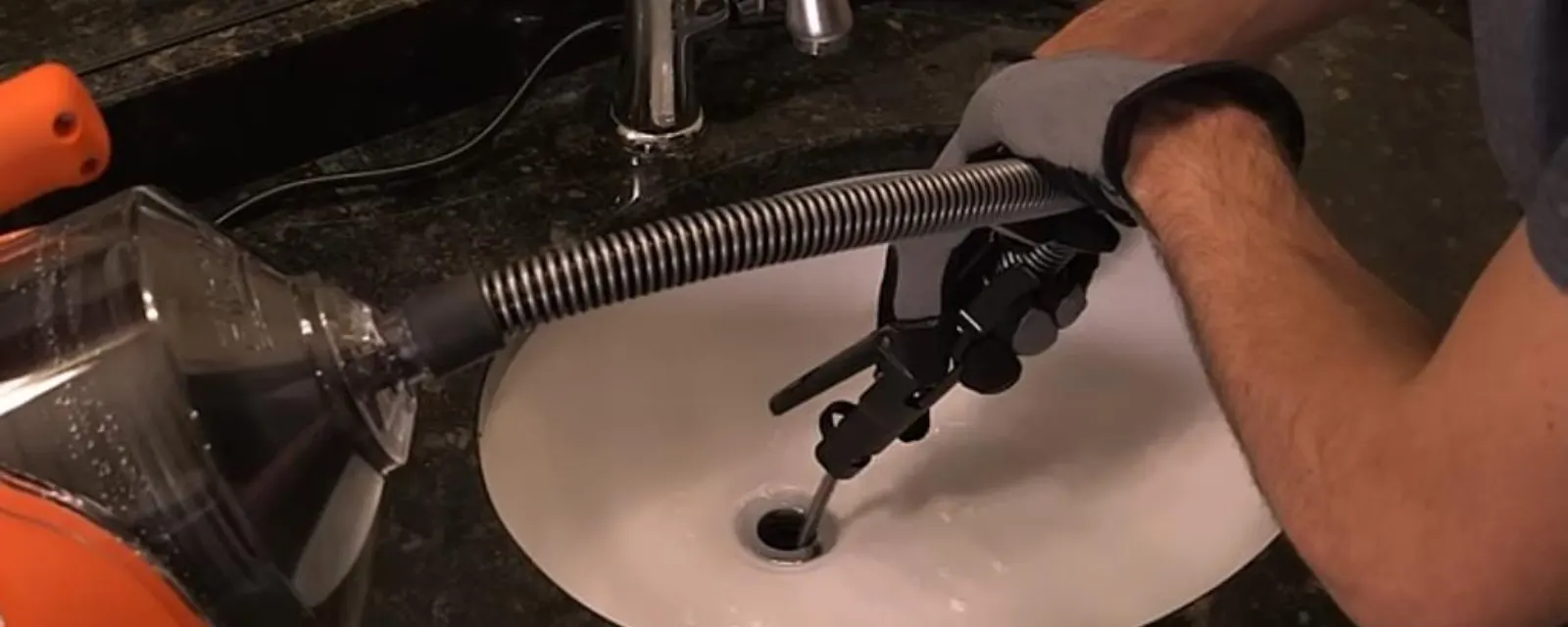
| Slow drain with hair | Rarely enough | Remove the hair, use a drain tool |
| Standing water, no movement | Will not help | Plunger, then a plumber |
| Several drains slow together | Will not help | Main line problem, call us |
Signs the problem is bigger than vinegar
Some drain trouble is a warning. If more than one fixture is slow, if water gurgles in a toilet when you run the sink or if a floor drain smells, the problem is probably in a shared line. A vinegar flush will not reach it, and delay lets a partial blockage become a full one.
In that case, stop pouring chemicals down the drain and call. A plumber can clear the line and, if it keeps returning, look inside with a camera. Our sewer line cleaning page covers main line backups, and hydro jetting explains the method for stubborn grease and scale.
If you live in Victorville or Hesperia, the same advice applies. See our Victorville and Hesperia pages for coverage.
Keeping drains clear without harsh chemicals
Prevention costs less than cleaning. Use a strainer in the kitchen sink and the shower, and empty it often. Scrape plates into the trash, not the drain, and never pour cooking fat down a sink. Wipe grease from pans before washing them.
Run hot tap water for a minute after washing dishes, since it keeps fat moving until it is past the trap. A monthly baking soda and vinegar flush helps with light buildup. Avoid "flushable" wipes, which do not break down like toilet paper and are a common cause of main line clogs.
Questions about vinegar and drains in Apple Valley
Yes for most household drains, in normal amounts. Avoid mixing it with bleach, and ask a septic professional if your home is on septic and you plan heavy use.
It softens thin scale. Thick, old scale in a pipe or trap needs a stronger fix, and a plumber can tell you whether the pipe is narrowed.
Once a month is plenty for light maintenance. If a drain needs it weekly, something else is wrong.
Occasional household use is not a problem for modern pipe. Frequent strong acids on old metal pipe can wear it over time.
Stop adding liquid and call. A blocked drain is a mechanical problem and needs a mechanical fix.
Still have a question about your situation? Call (760) 986-1999 any hour and ask.